The varieties of conceptual capitalism I identified in the previous post share one common trait: they all try to capture the astonishing dynamics of capitalist development. That even applies to mainstream economists reluctant to join the list, who constantly remind us that capitalism has existed since the dawn of humanity. While my list of authors and works is surely incomplete and could thus be substantially improved, two additional characteristics must be highlighted. First, most of the authors are men, with women comprising less than 15 percent of the total. That should not come as a big surprise, as women’s participation in the economics profession, for example, is around 25 percent in the Western world. While the number has been improving recently, the gap is still too wide.
Second, all the authors captured by my quick scan are from advanced capitalist countries, except for one (Rikap). Therefore, we are learning about the vicissitudes of capitalism from the perspective of core capitalist countries where it operates at full force. However, that group of countries represents at best 12.5 percent of the global population (8 billion and counting). Here we might be getting back into the Hegelian philosophy-of-history trap, where most of the world’s population is excluded because the “Spirit” train somehow missed all those exotic stations. Indeed, many authors almost completely neglect the “spiritless” people, while others try to bring them back in via colonialism, imperialism, globalization, democracy development, or, more recently, extractivism. But even in these positive cases, most look at them from the perspective of the Global North.
The question here is: how do we study the rest of the world from the perspective of those whose daily lives happen endlessly in the Global South? To be sure, that is not an empirical question. On the contrary, it is conceptual. Take the example of colonialism. Colonial powers did their best to justify their bloody enterprises by arguing that they were simply bringing “civilization” to backward societies (or “savages”), with the support of philosophers and intellectuals such as Locke. On the other hand, those being colonized had a wholly different take, as genocide and violent expropriation of land were inexplicably happening before their own terrorized eyes. Lacking cohesive response capacity, they were overwhelmed by the military superiority of the uninvited civilization forces.
Needless to say, many authors from the Global South have already made critical contributions to balance the one-sidedness of the development equation. I will cover this in an upcoming post. However, many of them are largely ignored, either for being too critical or for daring to write their ideas in “foreign” languages.
Regardless, to move forward, we need to intertwine the two sides of the story into a single narrative. Only in that way can we fully understand the complexity of these inexorably linked processes. Erasing one because it previously erased the other is not helpful in any case. After all, “Spirit” only lives in Hegel’s ideal world.
It is under that light that we should recast the idea of development, capitalist development that is. And that has a long history, which I will summarize below.
First, and challenging mainstreamers, I will submit that capitalism is a modern historical phenomenon that was set in (slow) motion by the alleged “discovery” of America. The astonishing yet unexpected transfer of resources and wealth from the “new” to the “old” Western world began to transform the latter in an unprecedented fashion. Empire-building, state formation and centralization, and competition for colonial resources led to wars among colonial powers, which eventually spurred the development of nation-states in Europe in the 19th century. Tilly’s “states create wars and wars create states” perfectly captures such a historical context.
State formation and centralization were complemented by the development of capacities to administer the territory under its purview and implement policies necessary to assert its sovereignty. From an economic perspective, mercantilism was the first of such policies in the modern era. The core idea was to accumulate wealth in the form of gold and silver, which were already flowing in massive quantities from the “New World” to European shores, while fostering protectionism to prevent their outflow to state competitors. Mercantilism set its sights on the sphere of circulation and exchange, seeing it as the sole creator of wealth at a time when capitalism was still incipient, if not nonexistent. That is partly why contemporary mainstream economists missed the target when the current U.S. administration imposed global tariffs last year on most countries, some of which do not even exist. The impact of such “mercantilist” policies in a country where capitalism is deeply ingrained cannot resemble that of 17th-century European non-capitalist states.
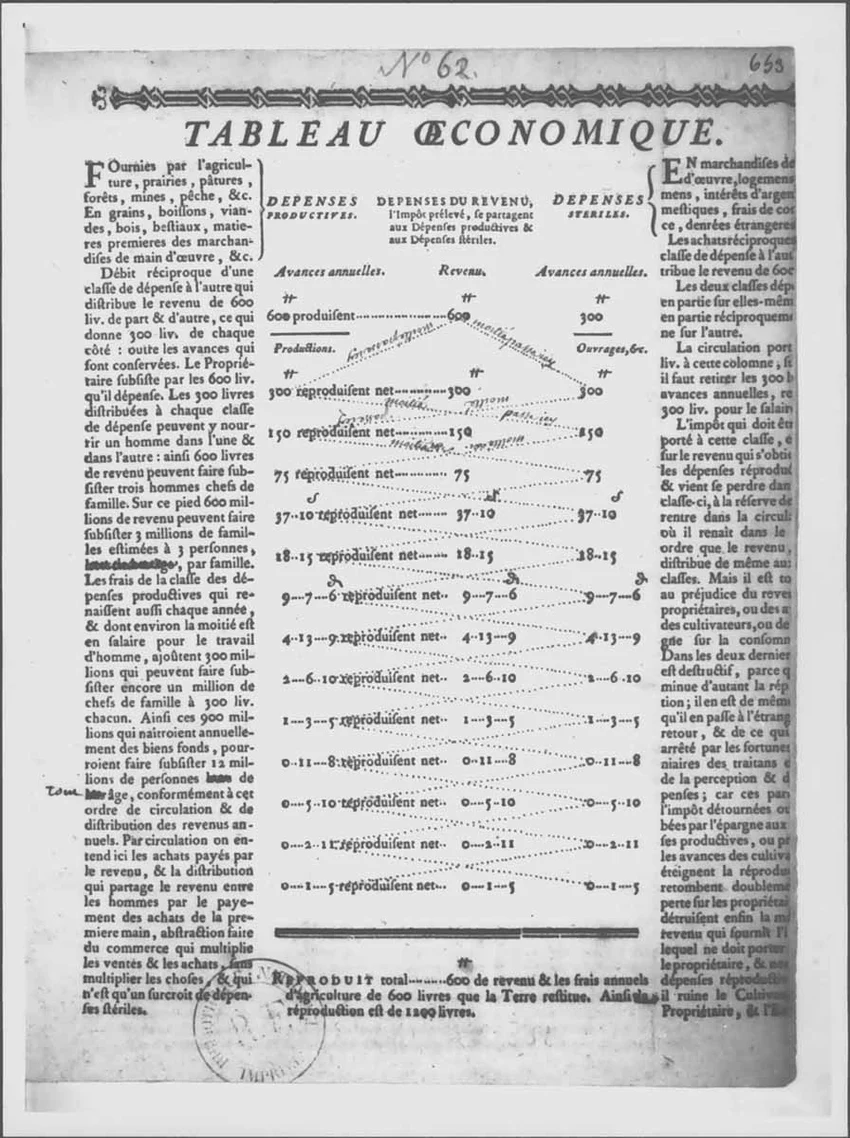
The Enlightenment gave rise to the Physiocrats, who in the second half of the 18th century challenged mercantilism. Physiocracy changed the focus from exchange to production and placed land and labor as the creators of wealth. Agricultural production thus took center stage. Its growth needed external markets to sustain its upward trend. Although it excluded crafts and manufacture from the creative process, this school of thought was more than ready to embrace free trade among competitive states. Note that Physiocracy emerged at a time when France was still an absolutist monarchy running on mostly feudal wheels—a far cry from capitalism.
By the end of the century, England was in full swing, churning the First Industrial Revolution—a clear manifestation of capitalist development, with the rest of Western Europe lagging far behind. That led to the emergence of Classical Political Economy (CPE), spearheaded by Adam Smith. CPE expanded the Physiocratic world’s narrow focus by incorporating most production sectors into the national wealth-creation process, with labor as its core source. But CPE was also extremely concerned about the distribution of wealth among the various classes, thus bringing inequality and potential social unrest into the equation. In their view, free trade was feasible as long as countries could exploit their comparative (production) advantages. However, authors such as Hamilton and List offered sound counterarguments, calling for the protection of infant industries in countries where capitalism was just emerging and was facing intense foreign competition from more advanced capitalist nations.
CPE ruled for about a century. It faced a strong challenge from Marginalism around the 1870s, which once again shifted the core tenets of economics. That school of thought shifted from production and distribution to consumption, enshrining the individual and their utility preferences as the sole creators of value. In this worldview, the market becomes the central actor through which individuals can maximize utility in various ways. Free trade is also beneficial as it allows those same individuals to maximize utility on a global scale. Marginalism is the mother of 20th-century mainstream economics, which acknowledged three factors of production (land, labor and capital) and separated micro from macroeconomics.
At the time, many European nations were already fully embracing capitalism while trying to catch up with the world leader, the United Kingdom. The U.S. and Japan, where capitalism was rapidly developing, were exceptional cases that deserve special attention in developmental analysis. On the colonial side, most nations in the Americas had already gained independence in the early 1800s. They eventually became markets for European manufacturing while providing industrial raw materials and foodstuffs in return. Africa and Asia replaced them as the main magnets for European colonial ambitions, now with clear capitalist connotations.
Critics of such a state of global affairs were not in short supply. From a liberal perspective, Hobson’s book on imperialism provided a devastating economic and ethical critique of uncontrolled colonialism. His work became a critical input to Luxemburg’s, Bukharin’s and Lenin’s contributions on the topic. The rise of monopolies, especially in the U.S., and the ascent of the financial sector in the late 19th century provided common ground for these authors. They sought either to improve or radically transform the perilous state of affairs generated by the emerging global capitalism. Interestingly, these European authors were perhaps the first to explicitly address the socioeconomic and political conditions of what we now call the Global South.
By the beginning of the 20th century, the U.S. was already showing astounding economic prowess. It even took the lead in policy on harnessing and regulating monopolies, cartels and trusts that had seemingly grown out of control during the last quarter of the previous century. Spared for the most part from the horrors of WWI, many U.S. economists focused on understanding capitalist dynamics, which manifested via regular business cycles and economic depressions. I have previously covered this evolution.
WWI was soon followed by the 1929 global economic depression, which lasted over a decade; its ending almost coincided with the beginning of WWII. In any case, between 1930 and 1945, capitalism endured a deep crisis that it eventually overcame. What is more relevant for my purposes here is that capitalist development until the 1930s took deep root in most Western European countries, albeit each following a slightly different path. Nevertheless, the competition among such states was part of the reason the wars of 1914 and 1939 broke out.
Such a broad-strokes history thus shows how capitalist development has two sides. The first one fits almost perfectly most Western European countries and the exceptional cases of the U.S. and Japan. These are the core capitalist countries that, at the time, defined the capitalist world. That does not imply that all of them were indeed capitalist societies. Countries in Southern Europe, such as Greece, Italy, Portugal and Spain were not considered part of the core capitalist team at the time.
Raul
