Category: Human Development
-
Developing Development – II
In 1936, Keynes published his famous opus, challenging mainstream economics. While his innovative contributions were indeed many, at least two are relevant for our purposes. For starters, deficit spending gave governments a decisive role in tackling economic crises and depressions through targeted interventions to revive private investment. Second, effective demand linked actual demand to production…
-
Developing Development
The varieties of conceptual capitalism I identified in the previous post share one common trait: they all try to capture the astonishing dynamics of capitalist development. That even applies to mainstream economists reluctant to join the list, who constantly remind us that capitalism has existed since the dawn of humanity. While my list of authors…
-
Conspicuous Inequality – IV
Development Economics Kuznets’ incessant empirical drive prompted him to dive into developing countries, seeking additional data to further test his long-term hypothesis on income inequality. As we saw in the previous post, the scant data available for a few developed countries only showed declining inequality matched by increased economic growth. Evidence regarding trends in inequality…
-
Conspicuous Inequality – III
Back to Kuznets A cursory overview of Kuznets’ personal and academic background reveals his distinct approach to economics, in contrast with the marginalist school. Having migrated to the U.S. in 1922, he then completed his Ph.D. in economics at Columbia University four years later under the supervision of W. C. Mitchell. Mitchell, one of the…
-
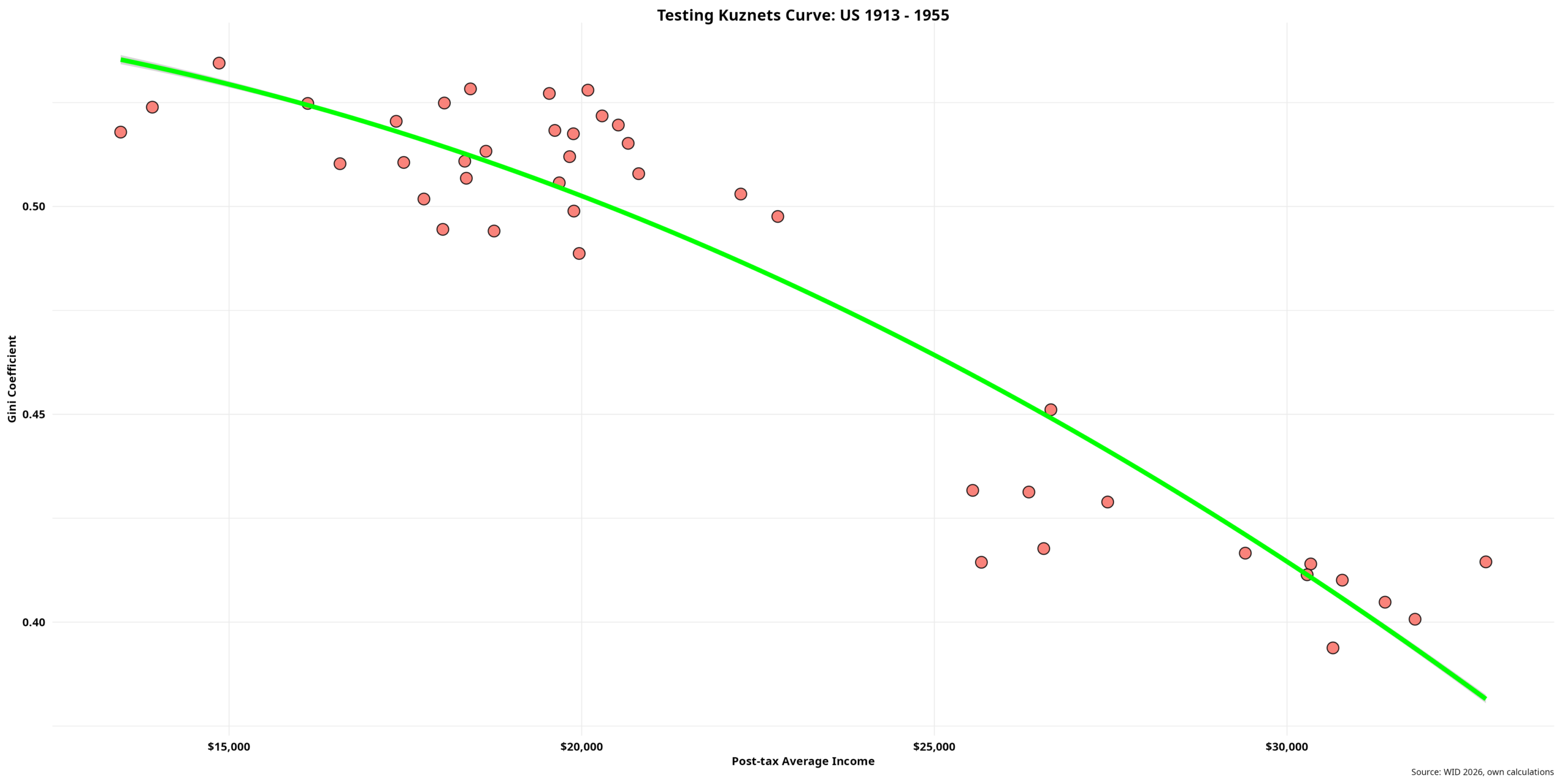
Conspicuous Inequality – II
Brief History of Inequality Since the earliest days of capitalist development, inequality has captivated policymakers and researchers alike. By the time Kuznets penned his influential article, a lot of water had gone under that bridge. The Physiocrats and primarily Classical Political Economy—spearheaded by Adam Smith—deserve particular mention. They placed inequality at the very heart of…
-
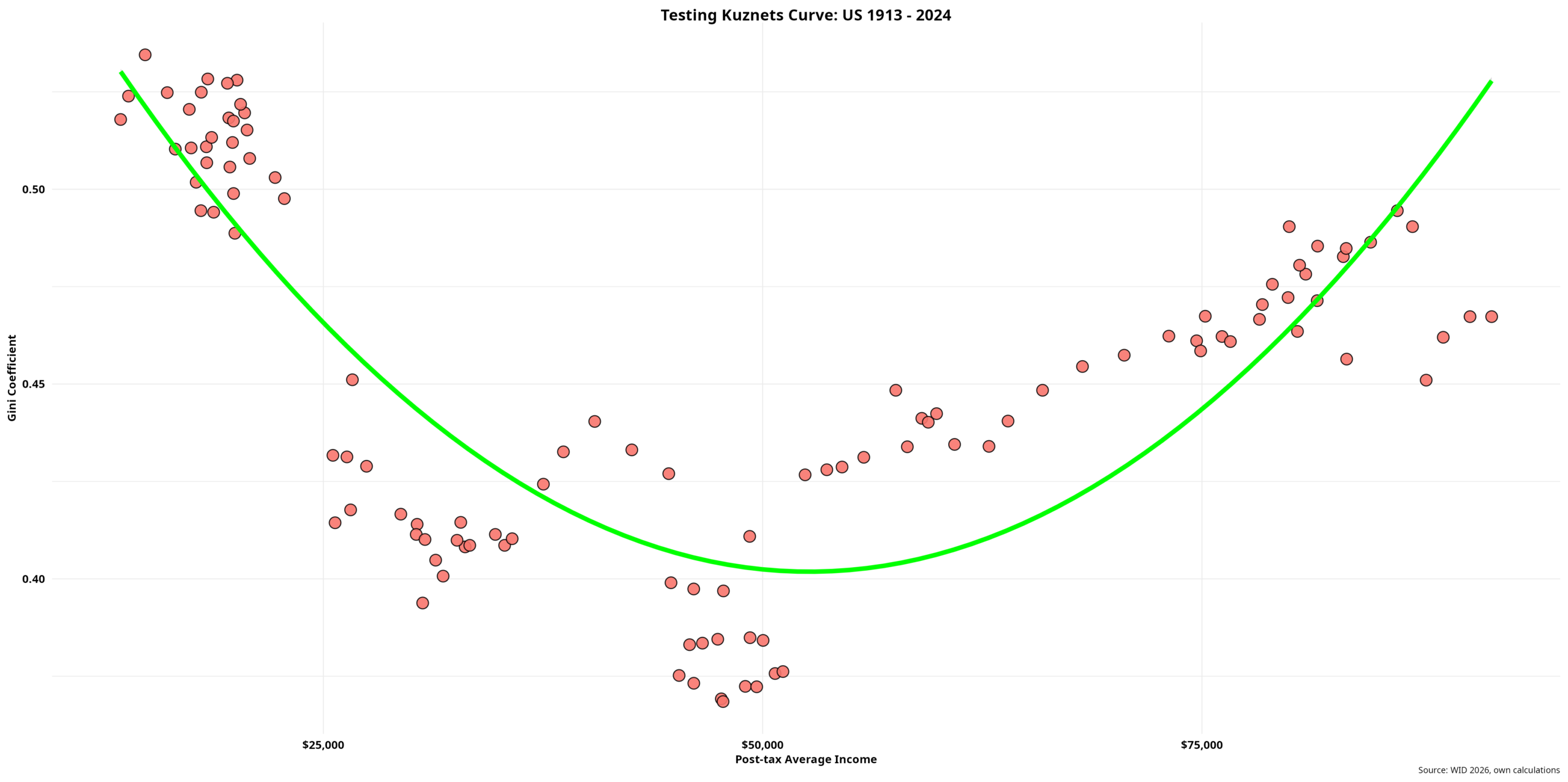
Conspicuous Inequality – I
Roaring Crisis Among the many ripple effects of the 2008/09 Global Financial Crisis, two interrelated outcomes stand out as perhaps the most unexpected. First, the so-called “Marx revival” was made possible by the deep global crisis, which strongly corroborated his argument that capitalism is inherently unstable. Mainstream economists, who adore steady states and equilibria, lack any…
-
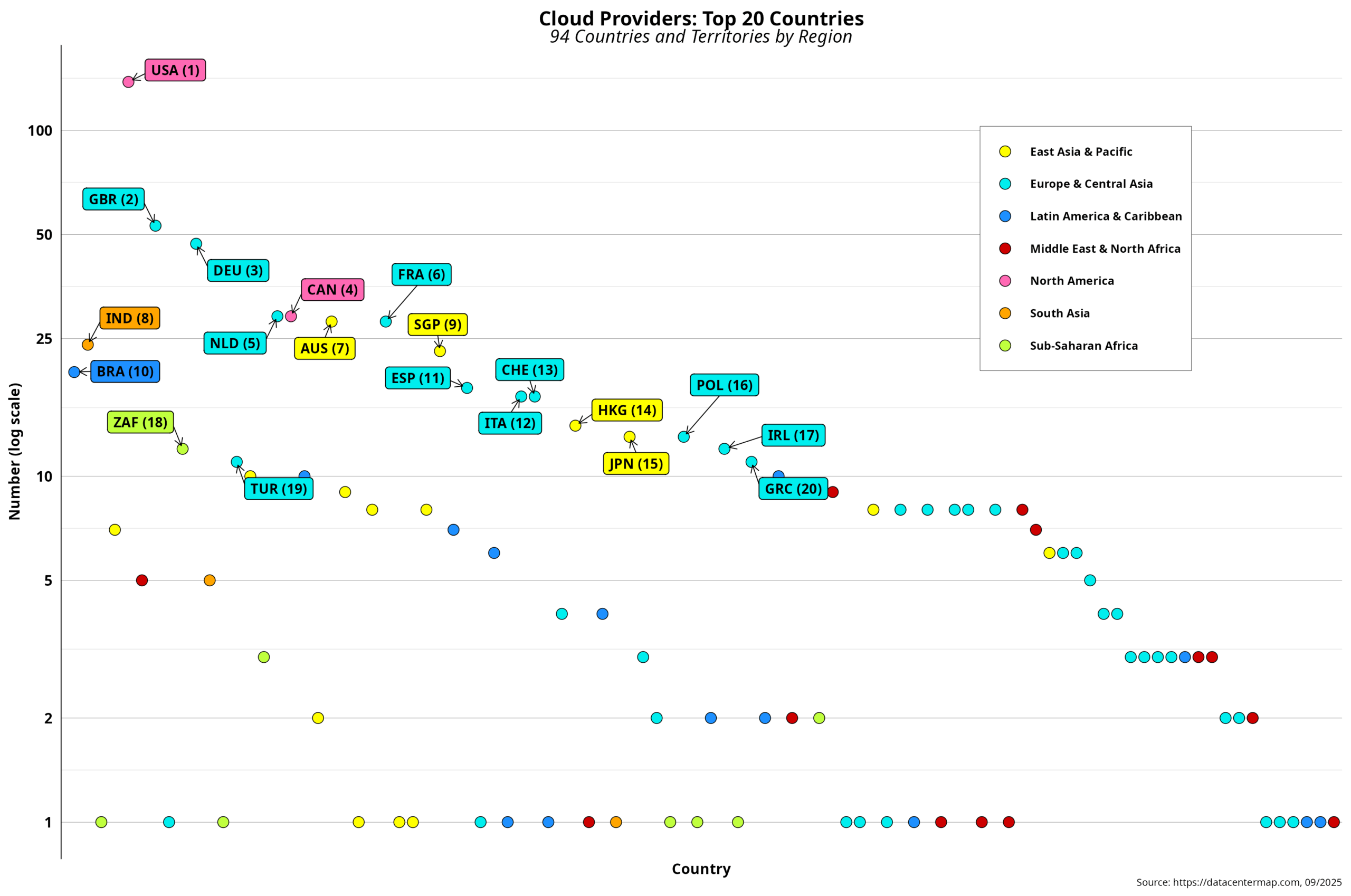
Clouds in the Cloud – II
Talk about an ongoing AI bubble seems to be getting louder by the minute. As previously mentioned, estimates indicate that by 2030, close to 7 trillion USD will be invested in the sector—assuming the bubble will not burst in the interim. Most of this massive investment is expected to go toward digital infrastructure, led by…
-
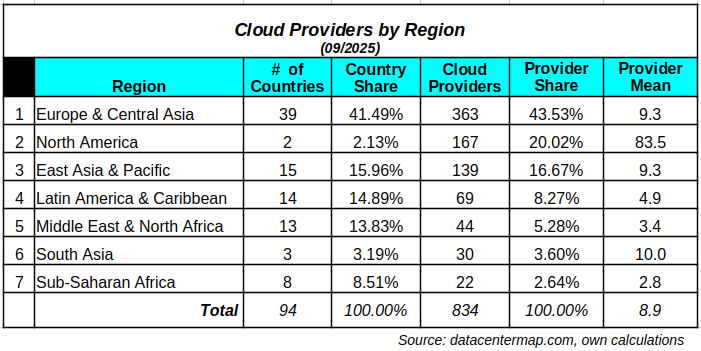
Clouds in the Cloud – I
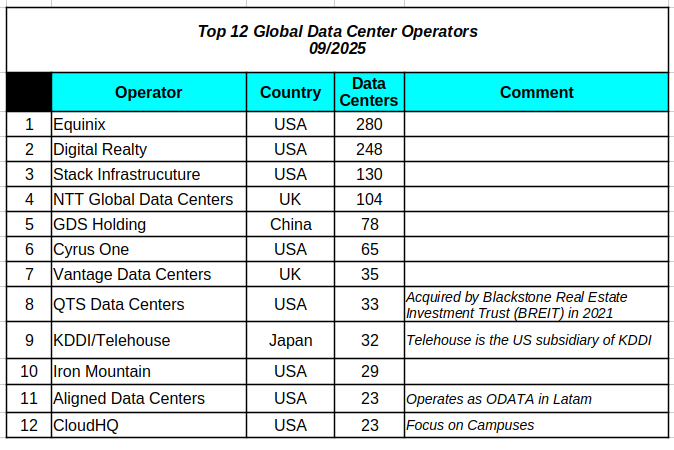
Now that we have a clearer picture of the uneven distribution of data center locations, we can take a closer look at cloud providers. The first step here is to conceptually differentiate between data centers and cloud providers. Recall that the business literature states that cloud providers are one of the five types of data…
-
Data Center Centralization – IV
The last time I visited Eswatini was in late 2019, three months before the COVID-19 pandemic almost brought our collective imagination to a halt. Digital government support was the excuse for the business trip. I had been there a couple of times before and was thus familiar with the territory. Elections held the previous year…
-
Data Center Centralization – III
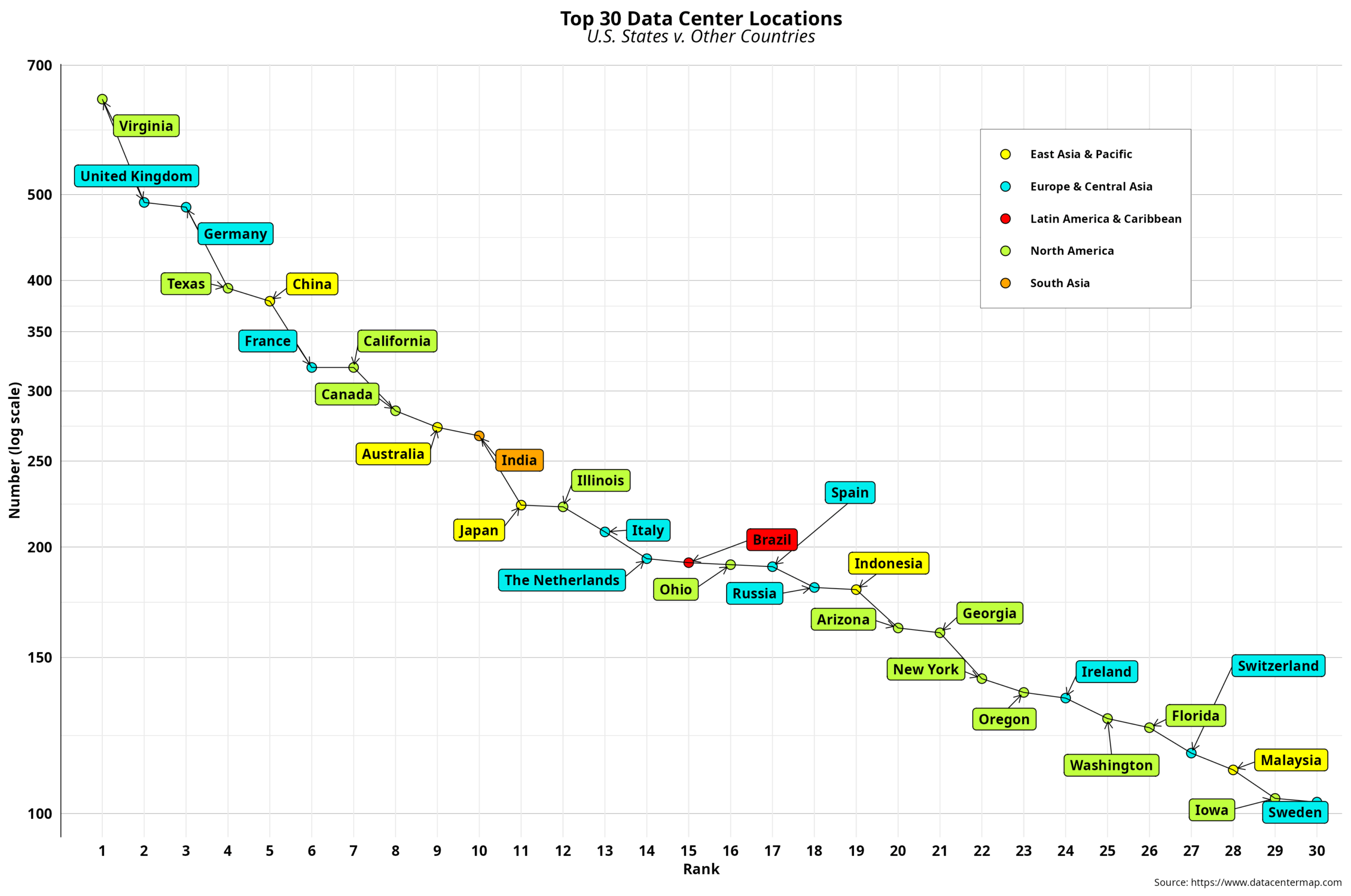
Country data typically provides a comprehensive macro overview of the current status of a particular theme, such as data centers in our case. The same goes for CO2 emissions, for example. On the other hand, countries are geographical abstractions that posit the topic within well-defined boundaries, where a national state exercises its sovereignty to the…
-
Data Center Centralization – II
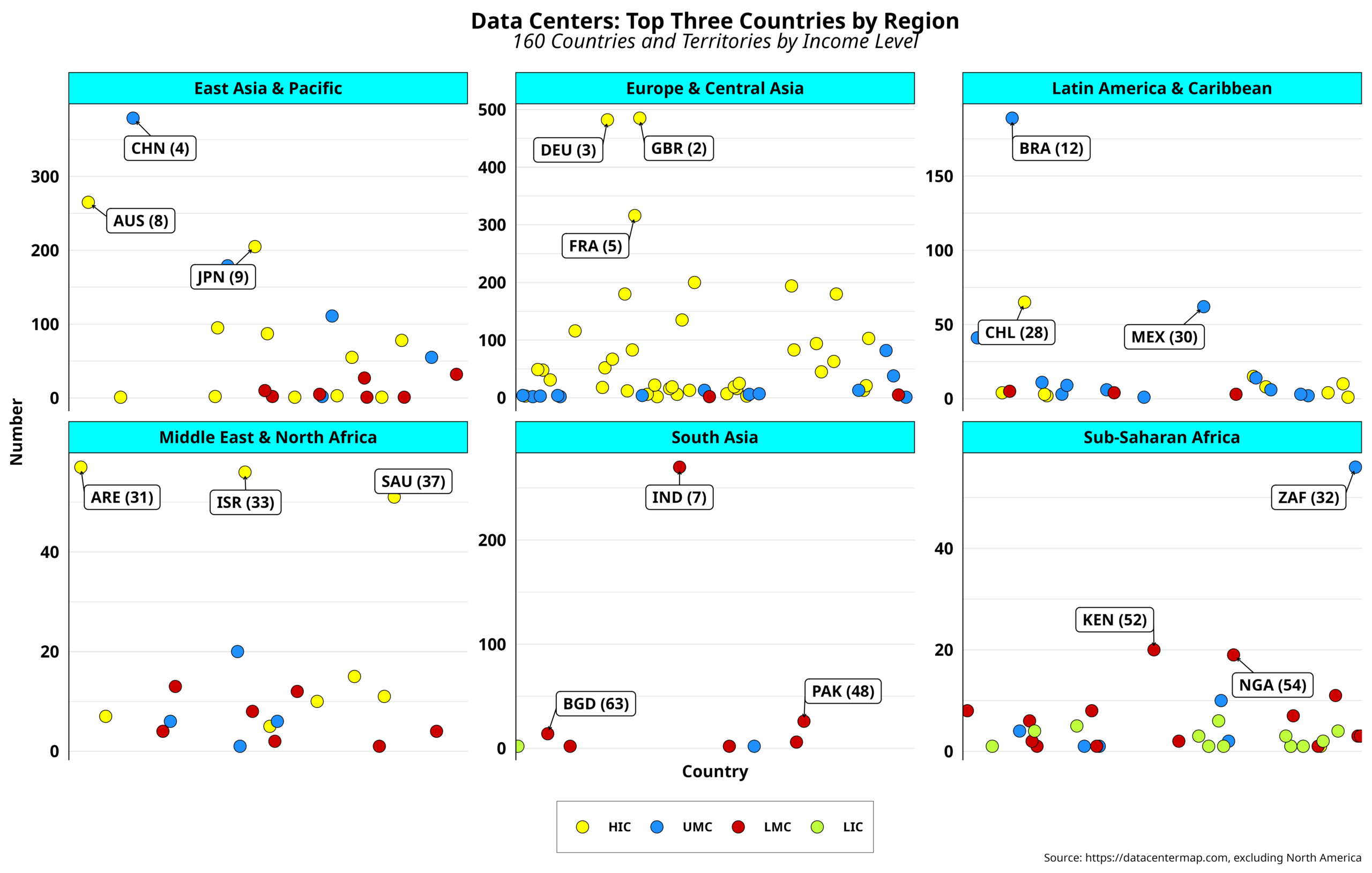
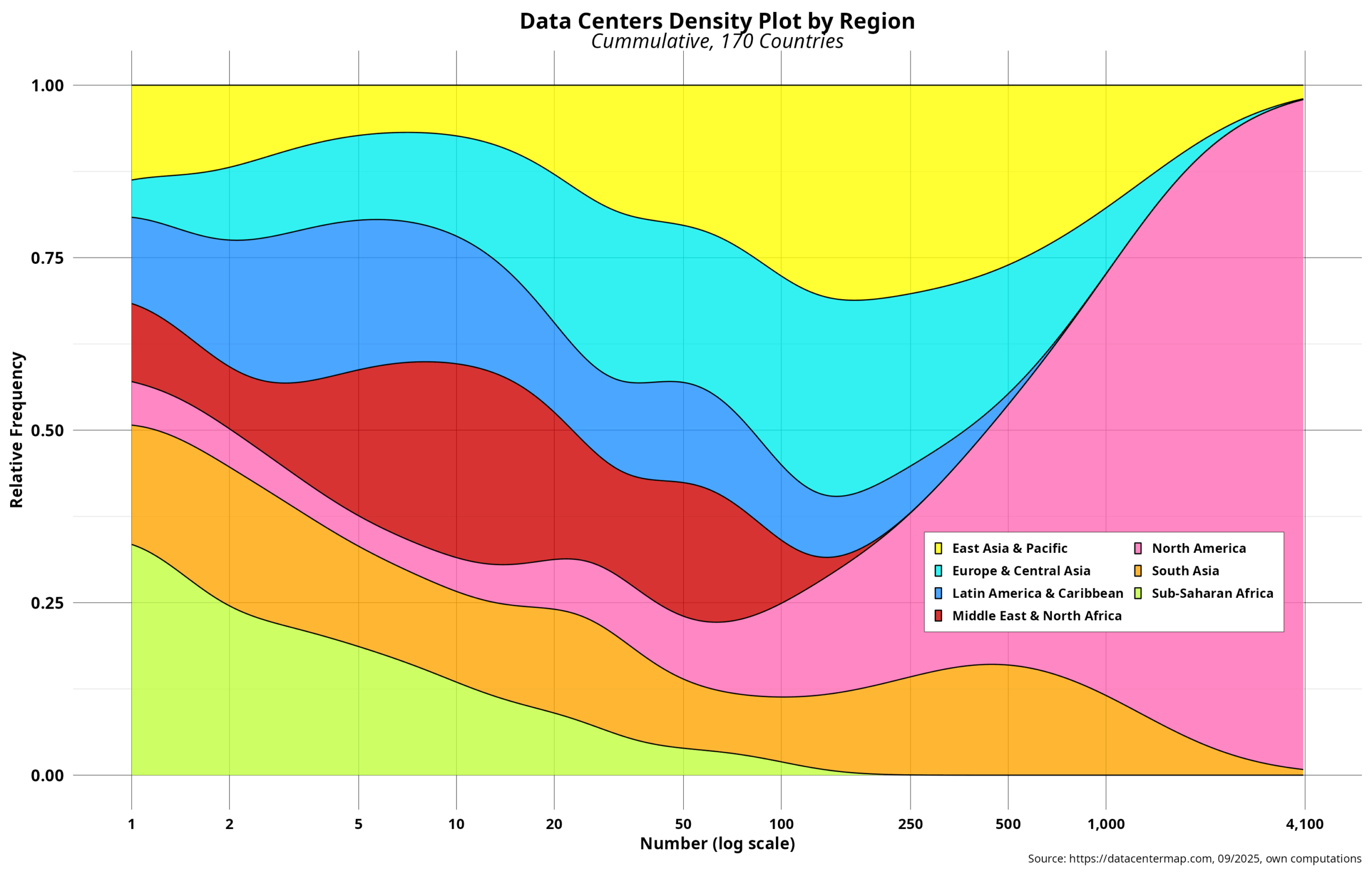
By now, we are aware that data center deployments have a clear geographical bias. Indeed, one region is significantly ahead of the rest. Those comprised of mostly industrialized countries follow, albeit at a considerable distance. The rest can hardly breathe. In any case, such patterns could serve as the first clue about which areas are…
-
Data Center Centralization – I
As mentioned in the previous post, capital investments in data centers are expected to hit record sums. Predictions for 2030 suggest that nearly 7 trillion dollars will be heading that way, with 25 percent of that amount allocated to energy resources alone. Indeed, Big Tech is not expected to be the only player in this…
-

Laboring AI – II
Research on the labor impact of GPTs is mainly focused on advanced economies in the West. Implicitly, it is assumed that what thrives in the former should also blossom in all other nations, provided they have reached a certain level of development and have been able to actively integrate into the global economy. The rest…
-
Laboring AI – I
The sudden resurgence of AI in the early 2010s, riding on the coattails of newly developed and groundbreaking machine learning and deep learning algorithms, was accompanied by the emergence of seemingly endless “future of work” conversations and, eventually, heated debates . By the end of the decade, generating target listings by job and/or sector had…
-
Digitalizing Sovereignty – V
A recent blog tackles the issues surrounding Africa’s digital sovereignty. It first defines sovereignty as a country’s capacity to independently create, develop, and govern AI. However, the supreme adjective I previously highlighted is missing from this definition. At any rate, the authors rightly emphasize that sovereignty comprises technical and political issues. On the technical side,…