Nowadays, the pace of technological diffusion worldwide is unprecedented. This is true for information and communications technologies (ICTs), best represented by the Internet (and all its newer platforms) and mobile technologies. Most will also agree that technology plays a decisive role in fostering economic development and growth. While that might be true in some contexts, was this always the case?
If we look back at the European expansion that began in the 19th Century, can we make the same argument? Did the European colonization of Africa and Asia at that time, which heavily relied on technological innovations and advantages, inevitably bring economic development to the colonies?
This is in part the question Headrick tries to answer in his 1988 book. Although dated 1, the book provides a detailed account of how the European powers gained access to and control of nations, people and resources by selectively deploying technologies while developing new ones.
 For sure, today, few still speak about “imperialism.” It seems the concept has fallen out of favor. Instead, it has been replaced by globalization. Some would argue that these two terms are synonyms, mainly if we characterize the latter as the expansion of multinational corporations on a global scale, accompanied by substantial gains in their political power vis-à-vis nation-states and local communities. But this is a different story that I will not address here.
So what is imperialism? Unfortunately, no definition is provided in the text. At first glance, Headrick seems to equate imperialism with expansionism, while avoiding any consideration of the reasons European countries embarked on such an enterprise. In his 1981 book, The Tools of Empire, Headrick discusses the concept in more detail but stops short of endorsing any specific definition.
The book concentrates on Western imperialism and its second wave, which started around 1850. The result of this new wave of Western European expansionism was the creation of so-called underdeveloped economies in Africa and Asia. How did this happen? What role did technology play in this process?
For Headrick, technology is not only a social process but also a social actor. It has a direct impact on human interaction and history. In terms of 19th-century Western imperialism, he identifies five ways in which such interactions take place:
- New, swift, and affordable means of penetration
- Increasing demand for “tropical” products in Western Europe
- Technology “exports” to Africa and Asia
- The increasing demand for technology by Africans and Asians
- Substitution of synthetics for tropical products
This book focuses only on items 3 and 4.2
One key issue here is the diffusion of technology from Europe to the colonies. Technology transfer, Headrick argues, has two components: 1. Relocation of technology itself, including the experts who can handle it; and 2. Diffusion of knowledge, skills, and “attitudes” of the technologies being exported. The first one he calls the economic or technical dimension of technology transfer. The latter is considered the cultural and political pillar of technology transfer.
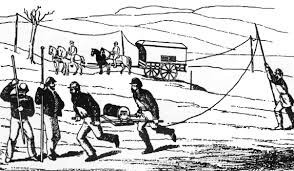 The book is then divided into two sections. Eight book chapters discuss the economic and technical aspects and include technologies such as ships, telecommunications, railways, sanitation, and mining, to name a few. The cultural elements are addressed in two chapters under the headings “Technical Education” and “Expertise.”
The core argument here is that the economic aspects of technology transfer move much faster than its cultural dimensions, due to the unequal balance of power between colonizers and colonized. This, in turn, led to the creation of developing countries, which are a complex mix of the traditional and the modern.
Headrick concludes, “The difference between growth and development is a matter of innovation, entrepreneurship, and diversification; that is, human capital. The reasons the tropics experienced growth but little development under colonial rule are that investments went into physical, not human capital, and the transfer of technology was more geographic than cultural” (pgs. 383-384).
Headrick argues that Europeans have little to no interest in promoting capacity development in the colonies. He even gives an example of Indian trains being driven by Europeans almost 90 years after their introduction in the subcontinent. This was only possible when the colonies became independent states. But even then, they depended heavily on Western technologies and expertise. No easy way out of this vicious cycle seems possible. In this light, it is not possible to explain the recent conversion of a selected group of countries from developing to emerging and industrialized economies.3
Headrick also makes another great point by arguing that Western imperialism in the 19th Century was openly and heavily backed by national states. No private company will invest in a colony without guarantees from its home country and specific incentives to do so. Many others were of public character (telecommunications included), supported by central states. Indeed, very few companies were willing to play the free-market and free-trade game back then. Those who tried faced multiple challenges.
Nowadays, the situation in this regard is different. A few of the companies expanding globally are public (China and a few emerging economies might have some of these). Most are now large private corporations. However, they are still demanding guarantees for their investments in less advanced economies. The creation of the WTO and recent draft agreements such as the TPP reflect this. The difference is that now we have concerted international efforts to make this a reality on a global scale.
In the end, Headrick pinpoints that technology diffusion between 1850 and 1940 did not lead to economic development. This should serve as a sobering example to all those who equate technology with development.
Headrick, Daniel R. 1988. The Tentacles of Progress: Technology Transfer in the Age of Imperialism, 1850 – 1940. New York: Oxford University Press. ISBN: 0-19-505116-5.
Cheers, Raúl
- For example, he states that no non-Western country has industrialized except Japan. This is not the case anymore, as countries such as Korea, Taiwan and Singapore, to mention a few, have joined that exclusive club. ↩
- The Tools of Empire focuses on the first two aspects of the process. ↩
- Here, the theory of the developmental state might become useful as a way out of this impasse while factoring in the use of new technologies to break the cycle. ↩
